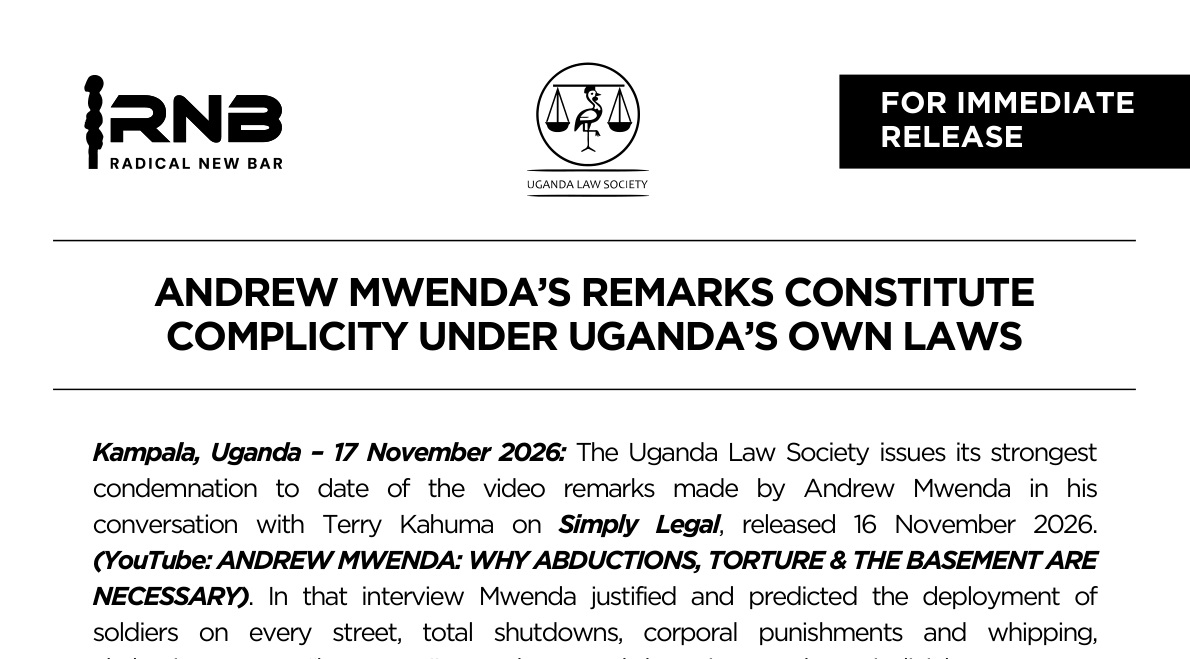
Senior Advocate Fred Muwema calls for better remuneration to raise legal standards.
By Adam Nuwamanya.
Kampala, Uganda
Speaking with impassioned urgency during the 28th Edition of RNBLive: Press and Public Engagement with the Radical New Bar on July 24, 2025, Senior Advocate Fred Muwema issued a powerful call to action: pay advocates better if society expects quality legal services.
Muwema, a more than three-decade senior legal practitioner, decried what he termed “the deliberate neglect of advocate remuneration,” arguing that the underpayment of lawyers undermines not only professional standards but also the rule of law itself.
“Remuneration is not just a personal concern. It is a structural necessity. Fair and adequate pay is what guarantees quality legal service. It is what ensures independence. It is what enables us to stand firm in defence of the rule of law—without fear or favour,” Muwema asserted.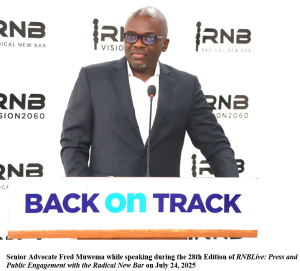
He painted a stark picture of the legal profession in Uganda: lawyers who begin their careers on precarious financial footing, burdened by cultural obligations, operating in a system that does little to support or protect their economic independence.
“Many of you know this to be true—your first pay-cheque as a young lawyer was claimed by someone else. Maybe your parents. Maybe your community. It’s a cultural obligation, yes—but also a reflection of the shaky foundation on which we start this career,” he said.
Despite lawyers’ vital roles in governance and justice, Muwema said they often retreat into narrow practice rather than stepping into leadership or shaping public discourse.
Referencing Uganda’s post-1986 legal transition, Muwema reminded justice seekers that when President Yoweri Museveni assumed power, it was a lawyer—Chief Justice Peter Allen—who legally consecrated that moment. Yet today, he argued, advocates have failed to harness their proximity to power to influence national policy.
 A profession still shackled by colonial structures
Muwema blamed archaic colonial-era laws and institutional indifference for what he described as the “economic strangulation” of advocates.
“We have not participated in the ‘fundamental change’ promised in 1986 because we are still shackled by laws that suppress our economic independence.”
The cost of silence
Muwema also touched on an internal cultural problem within the legal profession—the reluctance of many lawyers to join the fight for reform. He described himself as a “lone wolf,” lamenting the lack of solidarity among his peers as he battles legal restrictions on remuneration, including limitations on success fees—a matter he’s currently pursuing in court.
“Many of my colleagues have left me to fight this battle alone. But let me be clear: this isn’t just about personal gain. It’s about raising the standard of legal practice. You want excellence in legal services? Then fund excellence. Pay the lawyer. Respect the advocate.”
A broken system breeds mediocrity
Muwema warned that the continued underpayment of advocates would lead to a decline in service quality, as lawyers are forced to chase side hustles or cut corners to survive.
“What kind of legal system can flourish when the lawyer is hungry? Instead of preparing briefs, lawyers are looking for transport fare or negotiating with clients who don’t value their work. That’s how mediocrity creeps in.”
He concluded with a call to decolonize and democratize the legal profession, starting with fair remuneration.
“If there is any injustice that needs urgent redress in the legal sector, it is this: the neglect of advocate remuneration. This is the unfinished business of decolonizing legal practice. Because right now, the private advocate is still viewed through a colonial lens—as a servant of the court, not a professional with rights and dignity.”
Whether Muwema’s words will ignite lasting change remains to be seen—but his message was unambiguous: Justice begins with a just wage.
Speaking on behalf of Radical New Bar President Isaac Ssemakadde, SC, and the Council, Vice President Mr. Anthony Asiimwe welcomed Senior Advocate Fred Muwema’s remarks, reaffirming that advocate remuneration has long been a central concern for the Radical New Bar.
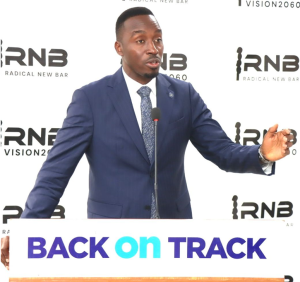
“We cannot achieve our 4D mandate—Decolonization, Demilitarization, Democratization, and Digital Transformation—if advocates continue to operate with inadequate or unboosted income. Fair and proper remuneration is one of the key ways to ensure that transformation,” said Vice President Asiimwe.
Related Posts