Nakivubo Floods: A Legal Wake-Up Call for Kampala
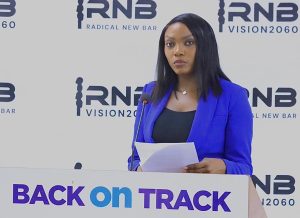
President Ssemakadde’s Take as Presented by Advocate Sheila Namahe during the 42nd Edition of RNBLive on Friday, November 8, 2025
The recent floods along the Nakivubo Channel in downtown Kampala are more than a natural calamity — they are a reflection of deep-rooted regulatory failure and institutional neglect. When the city’s primary drainage artery is obstructed by unregulated construction and poor waste management, the consequences are not accidental; they are legally preventable. The tragedy is, therefore, not just environmental but juridical — a failure of law enforcement, administrative accountability, and urban governance.
Traders in the arcades lost entire businesses overnight.
Families in waded through waist-deep water to reach safety.
And lives were lost.
All this — right in the centre of our capital city.
And yet, Kampala has no shortage of laws.
Uganda’s legal framework provides ample tools to prevent such disasters. The National Environment Act (2019), the Physical Planning Act (2010), and the Kampala Capital City Act (2010) clearly prohibit development in drainage corridors and require environmental impact assessments before construction. Yet, these provisions have often been ignored or selectively enforced. Developers have erected massive commercial structures across the Nakivubo Channel with apparent approval from public officers, raising serious questions of legality, corruption, and institutional complicity.
Legal intervention must therefore go beyond post-disaster response. It requires strict enforcement of existing environmental and planning laws, reform of outdated regulations that fail to anticipate rapid urbanization, and accountability for both private encroachers and negligent public officials. Where regulatory institutions are weak, the courts must act as guardians of public interest. Public interest litigation under Article 50 of the Constitution offers a viable pathway for citizens and civil society to demand enforcement of the constitutional right to a clean and healthy environment.
Remember the case of Environmental Action Network v. Attorney General (2001) —
where the High Court affirmed that environmental protection is a constitutional right.
That judgment should not gather dust; it should guide our practice today.
Going forward, a coordinated legal and policy framework is essential. The Kampala Capital City Authority (KCCA), the National Environment Management Authority (NEMA), and Office of the Prime Minister must work in concert to restore the Nakivubo Channel, criminalize future encroachment, and establish a clear compensation mechanism for affected citizens.
Enforcement must be revived.
NEMA and KCCA must jointly inspect all developments along the Nakivubo Channel
and demolish illegal structures, regardless of the developer’s status or influence.
The Physical Planning Act should be amended to classify drainage corridors as permanent no-development zones.
Accountability must be enforced.
Public officers who approved illegal building permits must be investigated under the Leadership Code Act.
Developers who obstructed natural waterways should face criminal penalties under the National Environment Act.
Such collaboration can transform Kampala from a city reacting to floods into one prepared to prevent them.
Enforcement must be revived
Colleagues, the Nakivubo floods are a warning.
They remind us that environmental governance is not about reports or committees —
it is about justice, accountability, and survival.
As members of the Law Society,
Let us be the voice that demands enforcement,
the advocates who file the public interest cases,
and the professionals who remind Uganda that the rule of law must flow —
just as Nakivubo Channel should freely, clearly, and without obstruction.
If we fail to enforce our laws, nature will enforce its own.
Thank you.
Isaac Ssemakadde, SC
Related Posts